Amatriciana Sauce Recipe
Amatriciana is a classic Roman pasta sauce built on a foundation of guanciale, tomatoes, and pecorino romano cheese. This rich, savory sauce perfectly balances the smokiness of cured pork jowl with bright acidity and creamy cheese. Authentic amatriciana transforms simple ingredients into a dish that represents centuries of Roman culinary tradition.
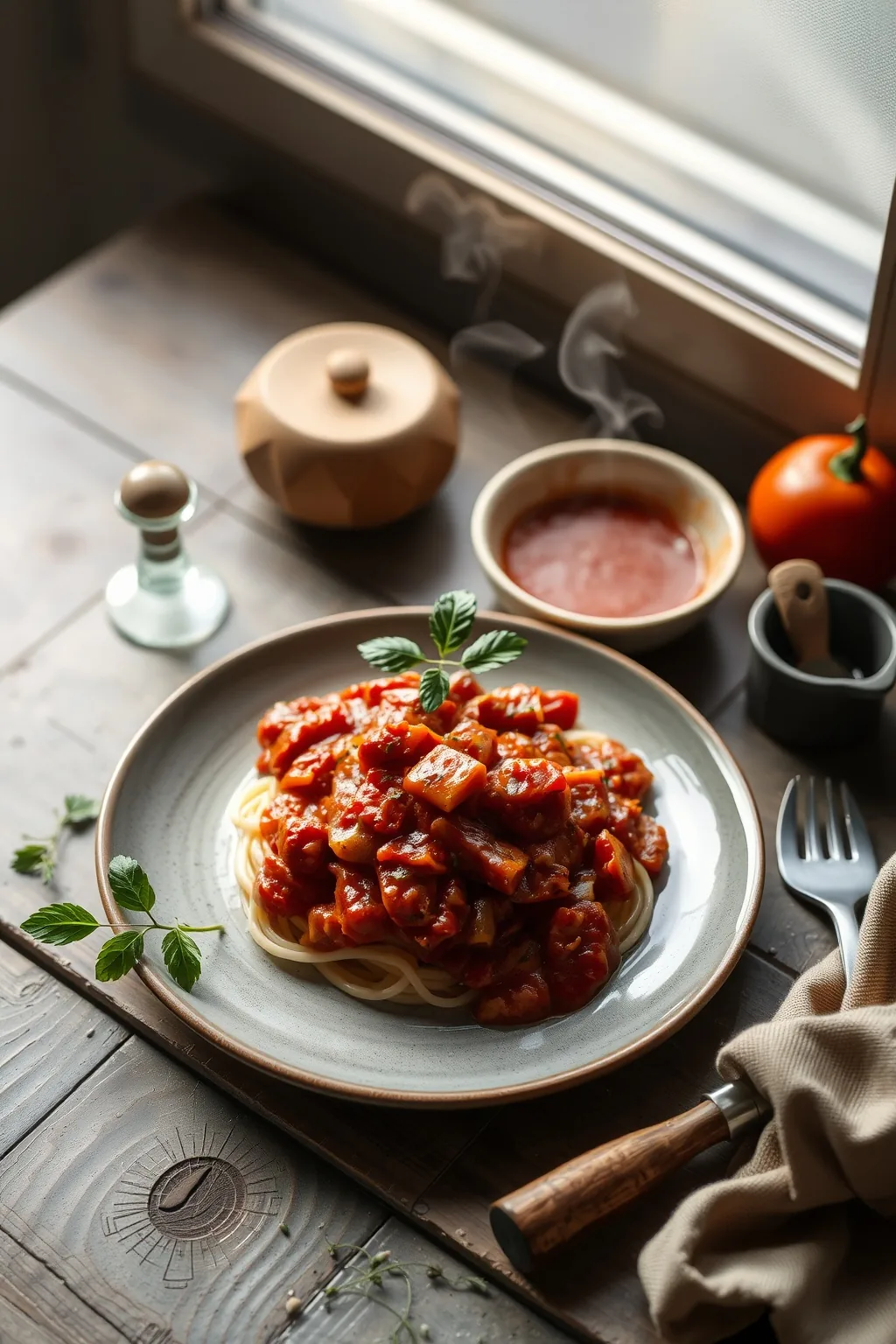
Ingredients
- 150g guanciale, cut into 5mm cubes
- 400g canned San Marzano tomatoes
- 75g pecorino romano cheese, finely grated
- 1 medium onion, finely diced
- 30ml dry white wine
- 1 teaspoon red pepper flakes
- 2 cloves garlic, minced
- 2 tablespoons extra virgin olive oil
- Salt to taste
- Black pepper to taste
Instructions
-
Cut the guanciale into small cubes approximately 5mm on each side, removing any excess rind but keeping the fat intact.
-
Heat the olive oil in a large heavy-bottomed saucepan over medium heat. Add the guanciale cubes and cook for 4-5 minutes, stirring occasionally, until the fat renders and the meat begins to brown slightly.
-
Add the diced onion to the pan and cook for 3-4 minutes, stirring frequently, until the onion becomes translucent and begins to soften.
-
Add the minced garlic and red pepper flakes, stirring constantly for 30 seconds until fragrant.
-
Pour in the white wine and scrape the bottom of the pan with a wooden spoon to deglaze, cooking until the wine reduces by half, approximately 2 minutes.
-
Add the canned tomatoes, breaking them apart gently with the back of a wooden spoon. Stir well to combine all ingredients.
-
Reduce heat to low and simmer the sauce uncovered for 12-15 minutes, stirring occasionally. The sauce should reduce slightly and the flavors should meld together.
-
Taste the sauce and adjust seasoning with salt and black pepper as needed. Remove from heat.
-
Transfer the sauce to serving bowls or toss immediately with 400g of cooked pasta, reserving 120ml of pasta water. Top each serving with grated pecorino romano cheese.
Substitutions
- Pancetta (200g) can replace guanciale for a milder, less smoky flavor; cook it the same way
- Ground pork (150g) combined with 30g rendered pork fat can substitute for guanciale in a pinch
- Cacio di Roma or aged Parmesan can replace pecorino romano if unavailable, though with slightly less sharpness
- Fresh tomatoes (600g, crushed) can substitute for canned when in season; reduce simmering time to 10 minutes
Tips
- Do not rinse the guanciale after cutting; the fat coating helps it render properly and creates the sauce's characteristic richness
- Avoid adding cream or butter to amatriciana; the rendered guanciale fat and pecorino provide all the richness needed
- Use quality canned San Marzano tomatoes for authentic flavor; they have fewer seeds and less acidity than other varieties
- Pecorino romano must be added off the heat or stirred in gently at the end; high heat can cause it to clump
Amatriciana originates from Amatrice, a small town in Lazio, Italy, and has been a staple of Roman cuisine since at least the 16th century. The dish traditionally uses only guanciale, tomatoes, pecorino romano, and red pepper flakes—no garlic or onion—though modern Roman cooks often add these ingredients for enhanced flavor depth.
Frequently Asked Questions
How long does Amatriciana Sauce Recipe take to make?
Amatriciana Sauce Recipe takes about 35 minutes total — 10 minutes of prep and 25 minutes of cooking — and makes 4 servings.
What can I substitute in Amatriciana Sauce Recipe?
You can adapt it easily: Pancetta (200g) can replace guanciale for a milder, less smoky flavor; cook it the same way; Ground pork (150g) combined with 30g rendered pork fat can substitute for guanciale in a pinch; Cacio di Roma or aged Parmesan can replace pecorino romano if unavailable, though with slightly less sharpness.
How should I store leftover Amatriciana Sauce Recipe?
Keep it in an airtight container in the refrigerator for up to 5 days, or freeze for up to 3 months.
How much protein is in Amatriciana Sauce Recipe?
Each serving of Amatriciana Sauce Recipe has about 18g of protein and 380 calories.

Loading comments...