Castelmagno
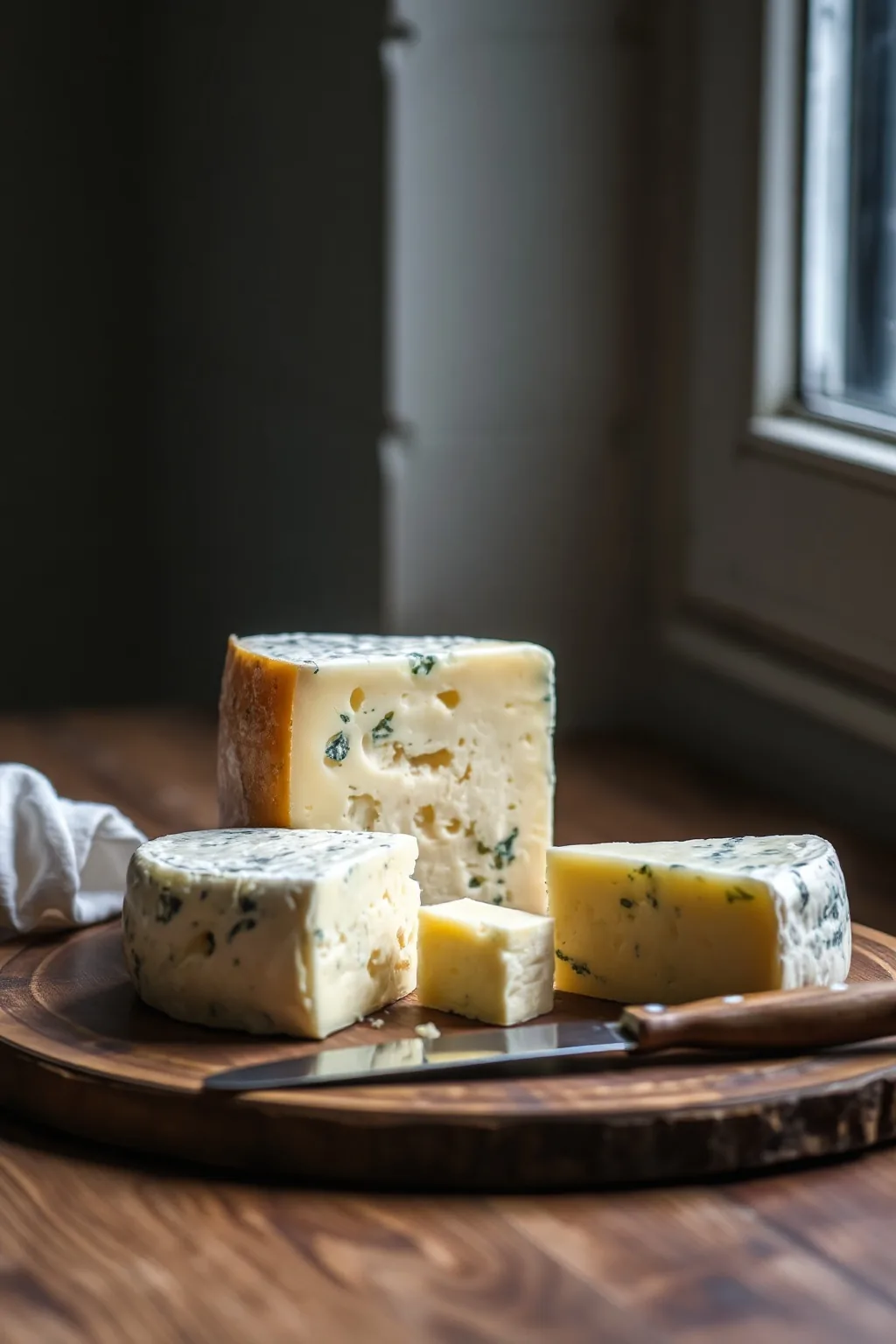
Castelmagno is a rare and prized Italian cheese from the Piedmont region, distinguished by its striking natural blue-green veining and semi-soft, creamy texture. Made in small quantities by licensed dairies in the Maira and Grana valleys, this cheese captures the essence of Alpine tradition and reflects the pure milk of grass-fed cattle grazing at high elevations. Its complex, mineral-forward flavor with subtle piquancy makes it one of Italy's most sought-after artisanal cheeses.
How Castelmagno is made
Castelmagno is produced exclusively by licensed dairies following strict PDO regulations that govern milk sourcing, production zones, and traditional techniques. Raw or pasteurized milk is heated gently and combined with specific cultures and natural mold spores that develop the characteristic blue-green veining during aging in cool mountain caves. The cheese is turned and maintained at precise humidity and temperature conditions—practices requiring specialized facilities and decades of expertise that cannot be replicated in domestic kitchens. The distinctive veining develops naturally through the cheese's natural porosity and the controlled environment of traditional aging caves.
How to use it
- Crumbled over risotto or polenta dishes
- Served on a cheese board with bread and mountain honey
- Melted into pasta sauces or potato gratins
- Paired with white truffles as a luxurious autumn delicacy
- Enjoyed on its own with a small spoon as a table cheese
Best substitutes
- Gorgonzola Piccante (similar blue marbling and Alpine origin)
- Taleggio (semi-soft, creamy Piedmont cheese with milder character)
- Bleu d'Auvergne (French blue cheese with comparable complexity)
- Fontina d'Aosta (Alpine semi-soft alternative without the blue veining)
Perfect pairings
- Moscato d'Asti or light, floral Piedmont white wines
- Mountain honey and walnut bread
- Fresh pears or grapes
- Cured meats such as speck or pancetta
Did you know? Castelmagno's blue-green veining occurs naturally without artificial mold injection, developing only in the traditional caves of the Maira and Grana valleys where the unique microclimate and mineral-rich air create conditions that no other location can replicate—making each wheel a genuine expression of terroir.