Fontina
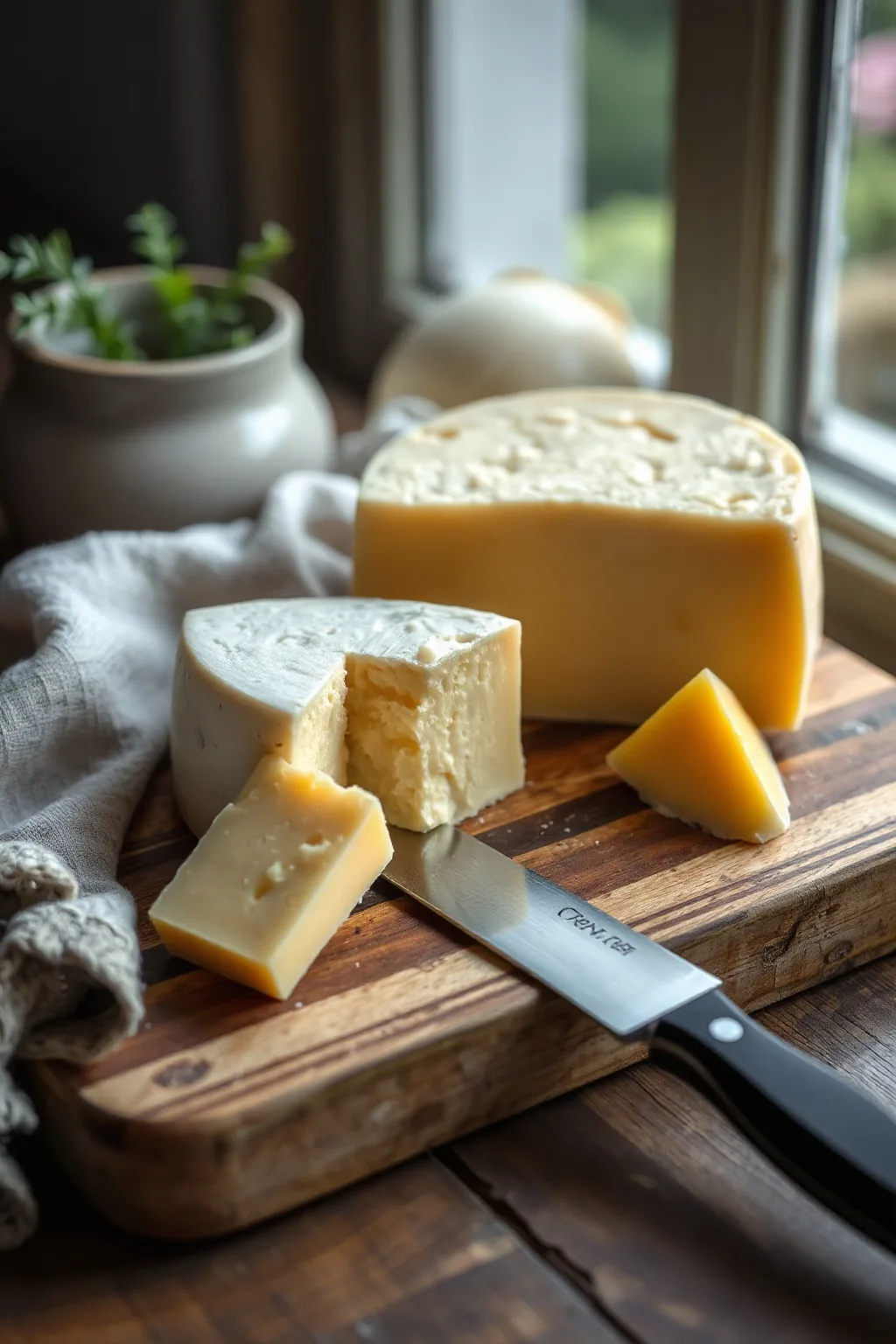
Fontina is a semi-hard Italian cheese renowned for its creamy, buttery character and subtle nutty sweetness. Produced in the Alpine valleys of northwestern Italy, it melts beautifully and is equally at home on a cheeseboard or incorporated into traditional dishes. This elegant cheese has been crafted for centuries using time-honored methods that remain largely unchanged.
How Fontina is made
Fontina DOP is made exclusively from raw milk sourced from cattle grazing in the Aosta Valley, ensuring terroir-driven complexity that cannot be replicated industrially elsewhere. The milk is gently heated and curdled, then the curds are cut and slowly stirred to precise temperatures using traditional copper vats—a skill passed down through generations of master cheesemakers. The wheels are turned and salted by hand, then matured in cool Alpine caves where natural humidity and temperature fluctuations develop the characteristic texture and flavor. The combination of raw milk, traditional rennet, specific bacterial cultures, and the unique microclimate of the aging caves makes DOP Fontina impossible to authentically reproduce outside this region.
How to use it
- Melted into fondue, paired with crusty bread and vegetables
- Sliced on a cheeseboard alongside cured meats and nuts
- Grated over risottos, polenta, or pasta dishes
- Layered into gratins or baked pasta recipes
- Enjoyed simply with fresh bread, honey, and fruit
Best substitutes
- Taleggio—softer and more aromatic, but similarly creamy and Alpine in character
- Reblochon—a French Alpine cheese with comparable melting qualities and mild flavor
- Gruyère—harder and more complex, but with similar nutty undertones
Perfect pairings
- White wines: Blanc de Morgex or crisp Valle d'Aosta whites
- Red wines: light Pinot Noir or Barbera d'Alba
- Fresh pears, walnuts, and acacia honey
- Prosciutto di Parma and crusty bread
Did you know? Fontina has been produced in the Aosta Valley since at least the 12th century, with records of its existence appearing in medieval monastic documents. The cheese was originally called 'Caseus Fontinae' and took its name from the Font Cheese dairy in the region, making it one of Italy's oldest documented cheeses with continuous production to the present day.