Gorgonzola
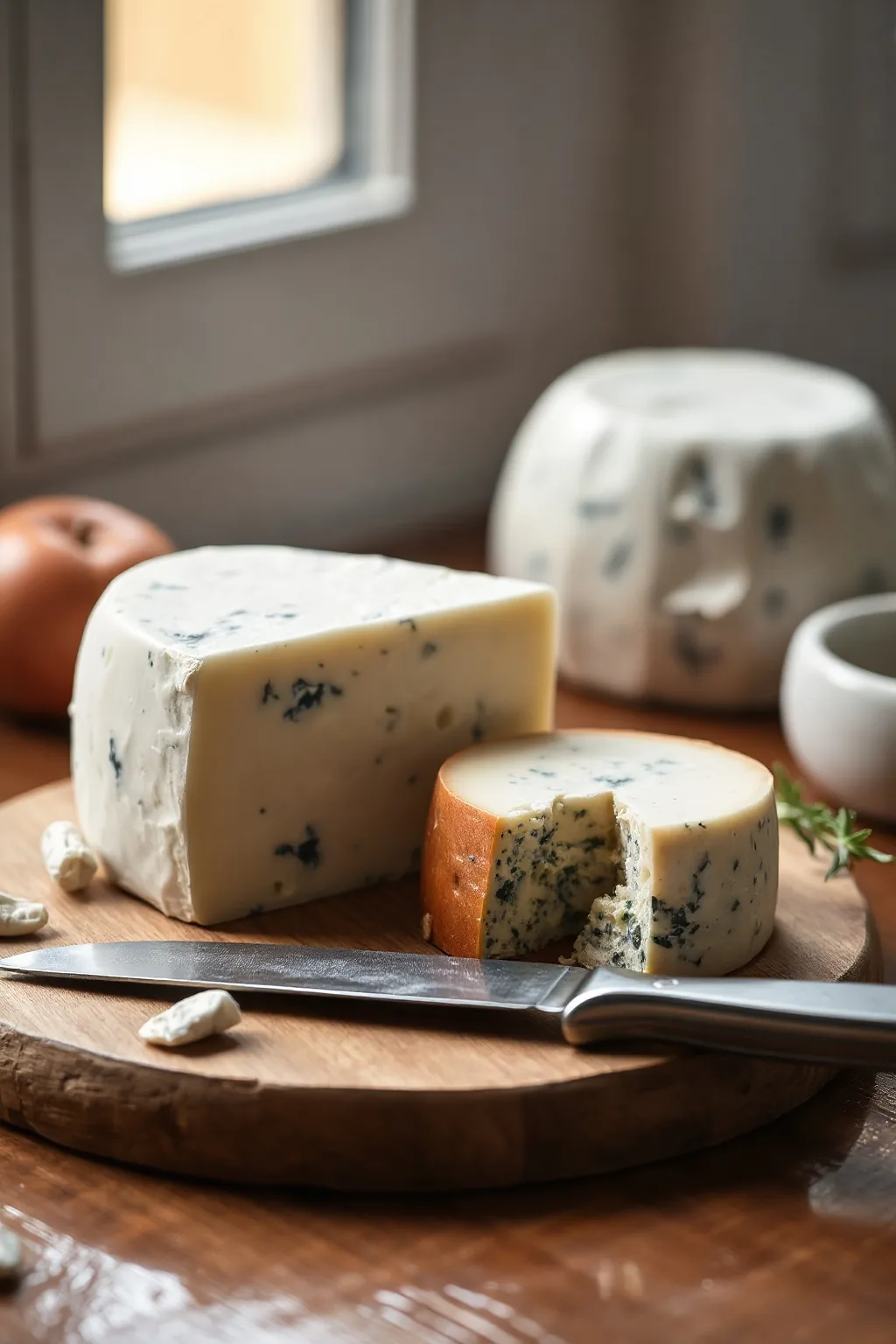
Gorgonzola is one of Italy's most iconic blue cheeses, renowned for its bold, complex flavor and distinctive blue-green veining throughout its creamy paste. Named after the small town near Milan where it originated, this cheese has been produced for centuries using traditional methods that cannot be replicated outside licensed dairies. Its pungent aroma and rich, somewhat sharp taste make it instantly recognizable among world cheeses.
How Gorgonzola is made
Gorgonzola is made by coagulating milk with rennet and cutting the curds into small pieces, then mixing natural blue mold spores (Penicillium roqueforti or glaucum) directly into the warm curds before draining. The cheese is placed in cylindrical molds to drain naturally over 24–48 hours, then transferred to humidity and temperature-controlled aging caves where the blue veining develops throughout the paste over weeks or months. The natural mold colonization and complex cave conditions—specific temperature, humidity, and air circulation—are impossible to replicate in home kitchens; additionally, strict DOP regulations govern milk sourcing, production facilities, and aging protocols that only licensed dairies can meet.
How to use it
- Spread on bread or crackers as an appetizer or cheese course
- Crumble over salads for a pungent, creamy element
- Mix into pasta sauces or risotto for depth and richness
- Serve alongside fresh pears, figs, or honeycomb for classic Italian pairings
- Use melted in soups or as a topping for burgers
Best substitutes
- Roquefort (French blue cheese, similar intensity and veining)
- Stilton (English blue cheese, slightly less sharp but comparable creaminess)
- Dolcelatte (Italian blue cheese, creamier and milder than Gorgonzola)
Perfect pairings
- Moscato d'Asti (sweet sparkling wine complements the pungency)
- Port wine or robust red wines like Barolo
- Fresh pears, figs, walnuts, and honey
Did you know? Gorgonzola's blue veining is not an infection or contamination, but rather the deliberate colonization of natural Penicillium mold spores that were historically obtained from caves in the region; modern production uses carefully cultivated and food-safe mold strains to ensure both safety and consistent flavor development.