Homemade Provola Cheese Recipe
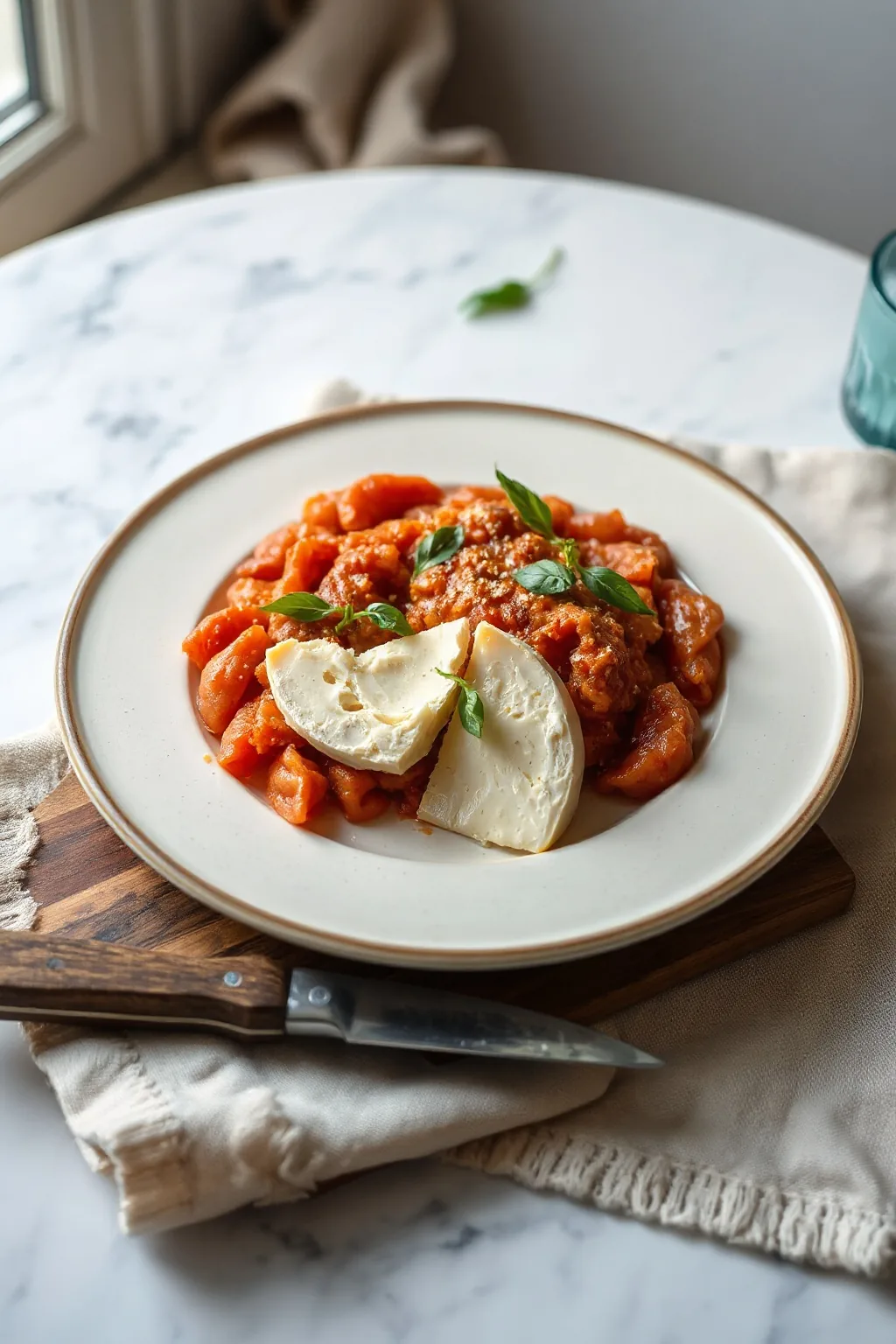
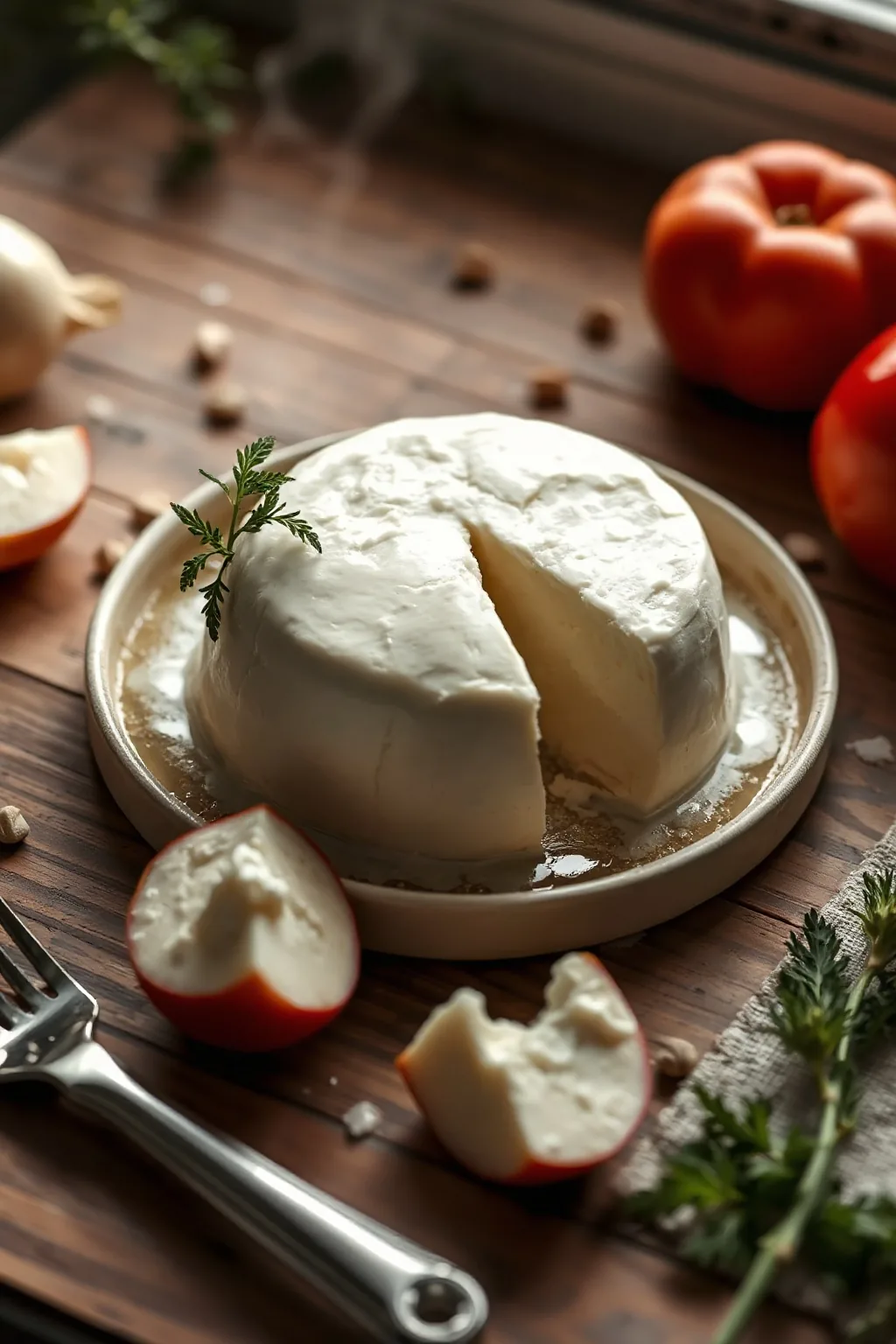
Provola is a traditional Italian stretched-curd cheese with a smooth, pale golden interior and a distinctive pear or bulbous shape. This homemade version captures the authentic flavor and texture of the Southern Italian original through careful milk heating and curd stretching. Making provola at home requires patience and precision, but yields a semi-hard cheese with a mild, slightly sweet taste perfect for slicing or melting.
Ingredients
- 1 gallon (3.8 liters) whole milk, preferably not ultra-pasteurized
- ¼ teaspoon (1.25 ml) liquid rennet diluted in ¼ cup (60 ml) non-chlorinated water
- 1 teaspoon (5 grams) lipase powder dissolved in ¼ cup (60 ml) cool non-chlorinated water 30 minutes before use
- ¼ teaspoon (1.5 grams) salt for the curds
- Salt for dry-salting the finished cheese (approximately 1-2 teaspoons or 6-12 grams)
- Non-chlorinated water for heating and rinsing
Instructions
-
Heat the milk slowly to 90°F (32°C) over 15 minutes, stirring gently to distribute heat evenly. Add the dissolved lipase powder and stir well to combine.
-
Add the diluted rennet to the milk using an up-and-down motion with a long spoon for 1 minute. Let the milk set undisturbed for 10 minutes until a clean break forms when cut.
-
Cut the curds into ¼-inch (6 mm) cubes using a long curd knife in vertical, horizontal, and diagonal motions. Rest for 5 minutes after cutting.
-
Raise the temperature to 105°F (40°C) over 20 minutes while stirring gently and continuously. Maintain this temperature for 10 minutes, stirring frequently.
-
Slowly raise the temperature to 120°F (49°C) over 10 minutes while stirring. Hold at 120°F (49°C) for 15 minutes. The curds should be firm and clean.
-
Pour off 30-40% of the whey. Refill with 120°F (49°C) water to maintain curds at proper consistency. Continue stirring for 5 minutes.
-
Drain the remaining whey completely through cheesecloth, collecting the curds carefully. Gather the cloth at the corners and hang for 5 minutes to drain excess liquid.
-
Cut the drained curd mass into thin strips approximately 1 inch (2.5 cm) wide. Heat non-chlorinated water to 190°F (88°C) in a separate pot.
-
Place the curd strips into 190°F (88°C) water. Using a long spoon or stick, gently stir and fold the curds. When they become stretchy and hold together (after 3-5 minutes), begin pulling them out and stretching like taffy. The curds should become smooth and glossy.
-
Shape the stretched cheese into a ball and tie it with kitchen twine to create the characteristic pear shape. Hang in cool air for 2 hours to firm up. Once cool and firm, dry-salt the exterior with 1-2 teaspoons (6-12 grams) salt, rubbing evenly. Wrap in parchment and age at 50-55°F (10-13°C) for 2-4 weeks before consuming.
Substitutions
- Goat milk can replace cow milk for a tangier, more delicate provola flavor
- If lipase powder is unavailable, omit it for a milder cheese; the result will be slightly less traditional but still valid
- Pasteurized milk works if raw milk is unavailable, though ultra-pasteurized milk may produce less stretchy curds
Tips
- Use a reliable dairy thermometer and heat milk slowly—rapid temperature changes prevent proper curd development and stretching
- Non-chlorinated water is essential because chlorine interferes with rennet and the stretching process
- The curd stretching phase is the most critical step; the curds must reach proper elasticity or the cheese will be grainy rather than smooth and pliable
- Age the finished cheese for at least 2 weeks to develop the characteristic mild, slightly sweet flavor; longer aging creates a firmer, more complex cheese
Provola originates from Southern Italy, particularly Campania and Sicily, where it is traditionally made from water buffalo milk or cow milk and shaped into distinctive bulbous forms. The name derives from the verb 'provare,' meaning to stretch, referencing the signature stretched-curd technique that defines this cheese class.
Frequently Asked Questions
How long does Homemade Provola Cheese Recipe take to make?
Homemade Provola Cheese Recipe takes about 120 minutes total — 30 minutes of prep and 90 minutes of cooking — and makes 1 servings.
What can I substitute in Homemade Provola Cheese Recipe?
You can adapt it easily: Goat milk can replace cow milk for a tangier, more delicate provola flavor; If lipase powder is unavailable, omit it for a milder cheese; the result will be slightly less traditional but still valid; Pasteurized milk works if raw milk is unavailable, though ultra-pasteurized milk may produce less stretchy curds.
How should I store leftover Homemade Provola Cheese Recipe?
Store leftovers in an airtight container in the refrigerator for up to 3–4 days and reheat gently before serving.
How much protein is in Homemade Provola Cheese Recipe?
Each serving of Homemade Provola Cheese Recipe has about 200g of protein and 3200 calories.

Loading comments...