Italian Fish Cakes Recipe
Italian fish cakes, known as polpette di pesce, are a beloved coastal appetizer that showcases fresh seafood bound with breadcrumbs, herbs, and egg. These golden, crispy patties are pan-fried until tender and flaky inside, offering a taste of Mediterranean simplicity. Serve them warm with lemon wedges and a fresh tomato sauce for an authentic Italian experience.
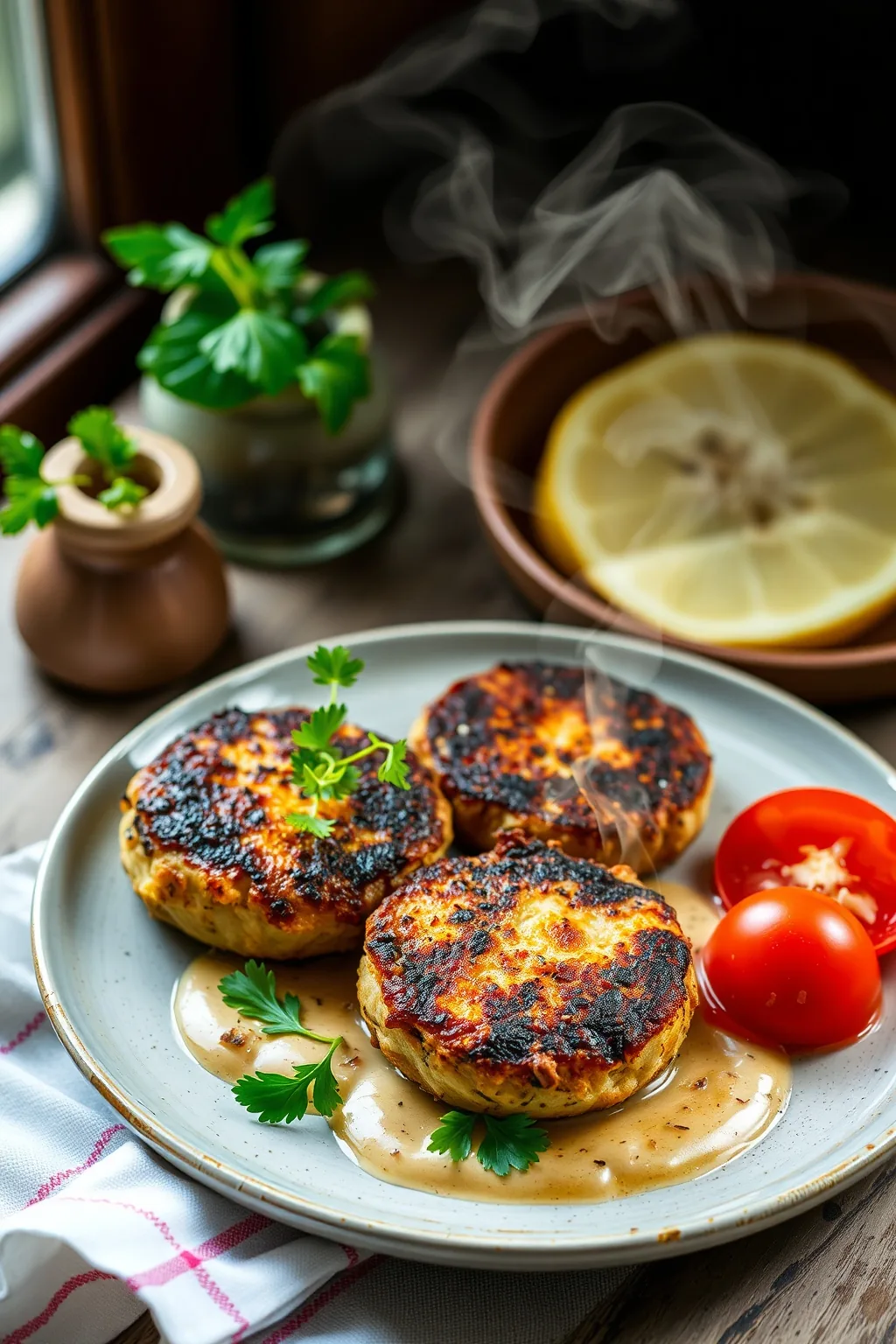
Ingredients
- 500g white fish fillets (sea bass, cod, or halibut), finely chopped
- 100g breadcrumbs
- 2 large eggs
- 50ml whole milk
- 30g grated Parmigiano-Reggiano
- 2 cloves garlic, minced
- 15g fresh flat-leaf parsley, finely chopped
- 10g fresh mint, finely chopped
- 1 small lemon, zest only
- 5ml extra virgin olive oil, plus 60ml for frying
- 2g sea salt
- 1g black pepper
- Pinch of cayenne pepper
Instructions
-
In a large bowl, combine the finely chopped fish with breadcrumbs, Parmigiano-Reggiano, garlic, parsley, mint, and lemon zest.
-
In a small bowl, whisk together the eggs and milk until well combined.
-
Pour the egg mixture into the fish mixture and stir gently with a wooden spoon until just combined—do not overwork the mixture.
-
Season with sea salt, black pepper, and cayenne pepper. Refrigerate for 10 minutes to allow the mixture to firm up.
-
Using wet hands to prevent sticking, gently form the mixture into 12 flat oval patties, each approximately 2.5cm thick.
-
Heat 60ml of extra virgin olive oil in a large skillet over medium-high heat until shimmering.
-
Carefully place the fish cakes into the hot oil and fry for 4 minutes on the first side without moving them.
-
Gently flip each cake and fry for another 3–4 minutes until the second side is golden brown and the centers are cooked through.
-
Remove the fish cakes with a slotted spoon and transfer to a paper towel-lined plate to drain excess oil.
-
Serve warm with fresh lemon wedges and tomato sauce on the side.
Substitutions
- For gluten-free: use gluten-free breadcrumbs or crushed gluten-free crackers in equal amount
- For dairy-free: substitute milk with unsweetened plant-based milk and use nutritional yeast instead of Parmigiano-Reggiano
- For lower fat: bake the formed cakes at 200°C for 15 minutes instead of pan-frying, brushing lightly with oil
- For different herbs: replace mint and parsley with 25g chopped fresh dill or fennel fronds
Tips
- Keep your hands wet when forming the cakes to prevent the mixture from sticking, but do not oversaturate—just damp hands are ideal
- Do not move the fish cakes while frying on the first side; this allows a protective golden crust to form
- If the oil is not hot enough, the cakes will absorb excess oil and become greasy; test with a small piece of bread that should sizzle immediately
- The fish cakes can be formed up to 4 hours ahead and refrigerated on a parchment-lined tray, covered with plastic wrap, then fried just before serving
Italian fish cakes are a staple in Mediterranean coastal regions, particularly in Sicily and Southern Italy, where fresh fish has been a dietary foundation for centuries. These cakes reflect the Italian principle of simplicity—using minimal ingredients to let the quality of fresh seafood shine through.
Frequently Asked Questions
How long does Italian Fish Cakes Recipe take to make?
Italian Fish Cakes Recipe takes about 35 minutes total — 20 minutes of prep and 15 minutes of cooking — and makes 4 servings.
What can I substitute in Italian Fish Cakes Recipe?
You can adapt it easily: For gluten-free: use gluten-free breadcrumbs or crushed gluten-free crackers in equal amount; For dairy-free: substitute milk with unsweetened plant-based milk and use nutritional yeast instead of Parmigiano-Reggiano; For lower fat: bake the formed cakes at 200°C for 15 minutes instead of pan-frying, brushing lightly with oil.
How should I store leftover Italian Fish Cakes Recipe?
Store leftovers in an airtight container in the refrigerator for up to 3–4 days and reheat gently before serving.
How much protein is in Italian Fish Cakes Recipe?
Each serving of Italian Fish Cakes Recipe has about 42g of protein and 385 calories.
Loading comments...