Pecorino Romano
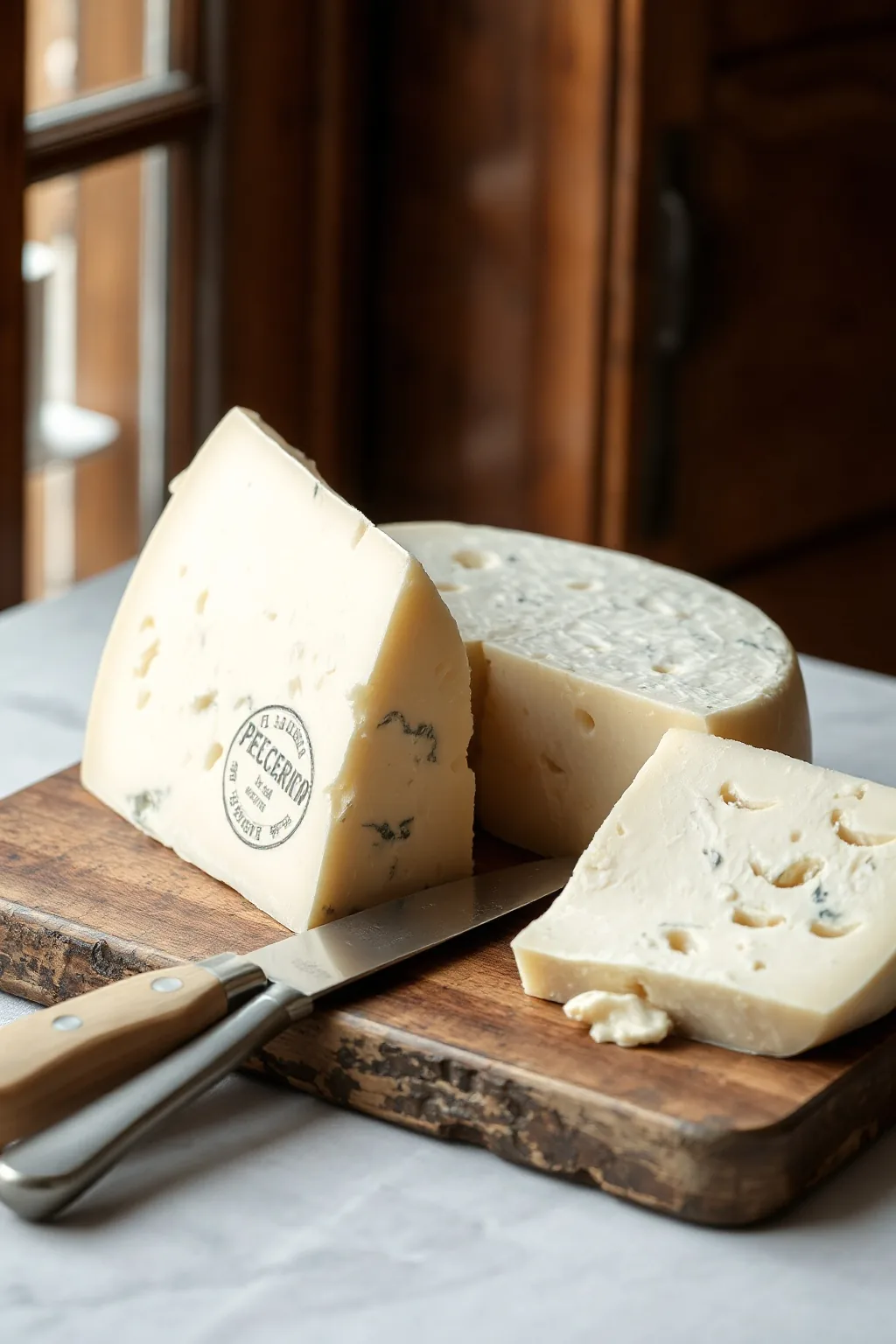
Pecorino Romano is one of Italy's most ancient and iconic cheeses, made from pure sheep's milk and renowned for its sharp, salty character. This hard, granular cheese has been produced for centuries and remains a staple of Roman and Italian cuisine. Its piercing flavor and crystalline texture make it instantly recognizable on the palate.
How Pecorino Romano is made
Traditional Pecorino Romano is produced by heating sheep's milk with natural rennet and special cultures, then cutting the curds to release whey. The curds are cooked at controlled temperatures, pressed into molds, salted by hand or brine immersion, and aged in controlled environments where natural molds and bacteria develop the rind. The specific microbiology of sheep's milk in designated regions, combined with precise traditional techniques and extended aging in proper caves or facilities, cannot be replicated outside licensed dairies—home production lacks the microbial complexity, proper aging infrastructure, and regulatory oversight essential to authentic Pecorino Romano.
How to use it
- Grated over pasta dishes, especially Cacio e Pepe and Gricia
- Shaved or cut into chunks as a table cheese
- Grated into soups and risottos for sharp umami depth
- Paired with honey and nuts as an after-dinner cheese course
- Crumbled over salads and vegetables
Best substitutes
- Pecorino Sardo (milder Sardinian sheep's cheese)
- Pecorino Toscano (slightly less sharp alternative)
- Grana Padano or Parmigiano-Reggiano (cow's milk alternatives with similar hardness)
Perfect pairings
- White wines like Vermentino or Pinot Grigio
- Honey and figs as a sweet-savory contrast
- Crusty bread and cured meats on a charcuterie board
- Fresh pear slices to balance its saltiness
Did you know? Pecorino Romano has been documented as a food staple since Roman times—legionnaires were issued rations of this cheese as a protein-rich, long-lasting provisions because its durability and salt content made it ideal for long campaigns and storage without refrigeration.