Taleggio
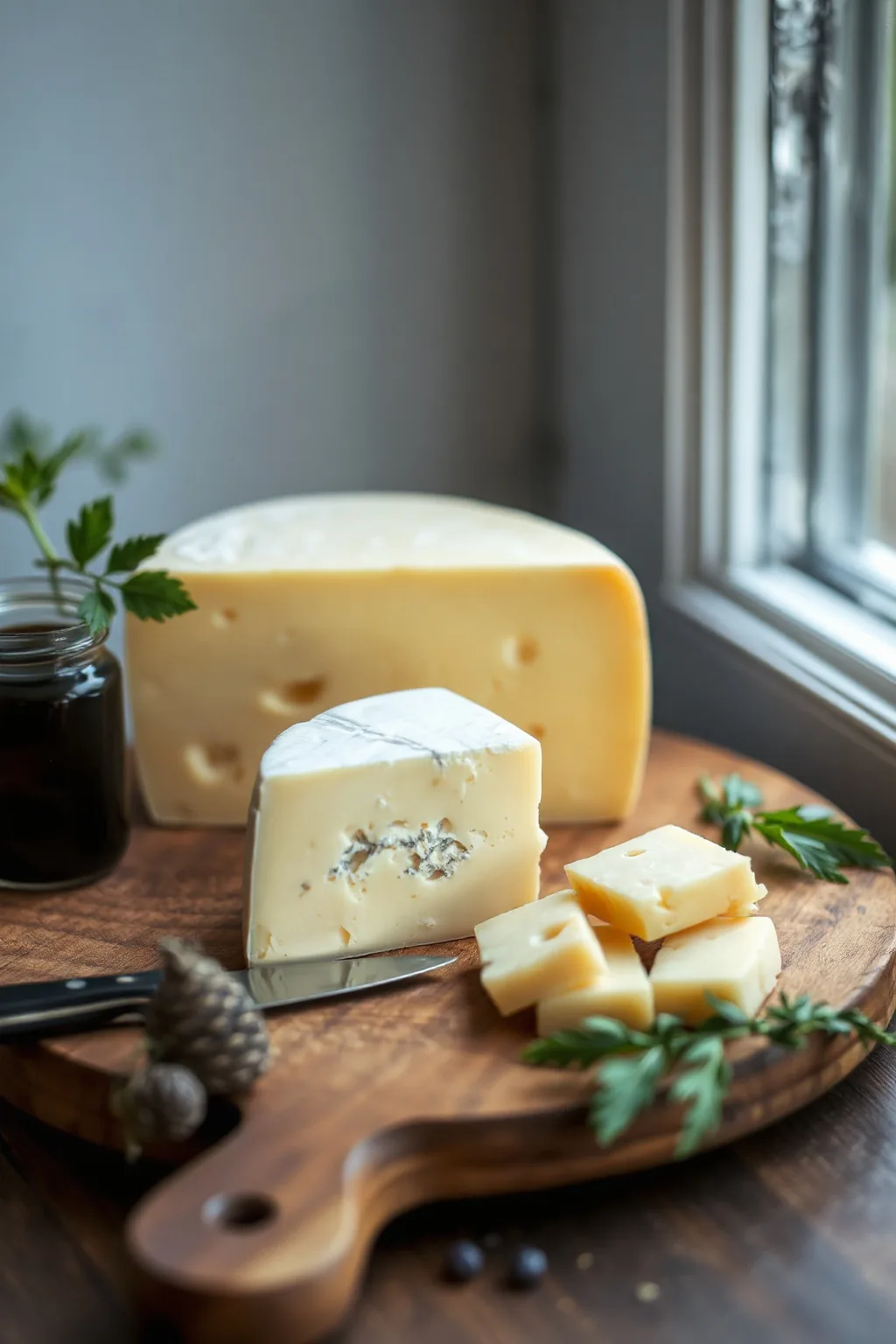
Taleggio is a semi-soft, washed-rind cheese with a distinctive pinkish crust and creamy, pale interior. Known for its rich, fruity aroma and complex flavor that grows stronger as it matures, Taleggio is a cornerstone of Northern Italian cheese tradition. Its supple texture and aromatic character make it equally at home on a cheese board or melted into warm dishes.
How Taleggio is made
Taleggio production begins with cow's milk that is gently heated and curdled with rennet, then cut into small curds and slowly stirred. The curds are transferred to traditional molds where they drain for 8-12 hours without pressing. Once molded, the young cheese is aged in cool caves or temperature-controlled rooms where it is regularly washed with brine water (or sometimes whey and salt solutions) to develop its characteristic rind and promote ripening. This washing technique and the specific microbial cultures cultivated during aging in controlled environments cannot be easily replicated at home, as they require precise humidity, temperature, and hygiene standards maintained by licensed dairies.
How to use it
- Serve at room temperature as part of a mixed cheese board with fresh fruit and bread
- Melt into warm polenta or risotto for a creamy, aromatic finish
- Use as a filling for flatbreads, pasta, or savory pastries
- Pair with fresh fruit such as pears, grapes, or figs for a simple dessert course
- Bake whole or in portions and serve warm with crackers or cured meats
Best substitutes
- Reblochon (French washed-rind cheese with similar creaminess)
- Stracchino (Italian semi-soft cheese with milder aroma)
- Pont-l'Évêque (Norman washed-rind with comparable aromatic intensity)
Perfect pairings
- White wines such as Franciacorta, Pinot Grigio, or light Chardonnay
- Red wines with gentle tannins such as Barbera or light Pinot Noir
- Aged balsamic vinegar and raw honey drizzled over warm cheese
- Fresh pears, quince paste, or cured meats like speck or prosciutto
Did you know? Taleggio's name derives from the Val Taleggio (Taleggio Valley) in Bergamo, and historical records show cheese production in this valley dating back to at least the 11th century, though the cheese's current style and washed-rind technique became standardized in the early 20th century.