Busiate with Pesto Trapanese Recipe
Busiate with Pesto Trapanese is a traditional Sicilian pasta dish that captures the vibrant flavors of southern Italy. This regional specialty features hand-rolled busiate pasta coated in a fresh, herbaceous pesto made with basil, garlic, tomatoes, and almonds—a distinctive variation from the Ligurian version. The dish is bright, aromatic, and effortlessly elegant, perfect for showcasing seasonal ingredients.
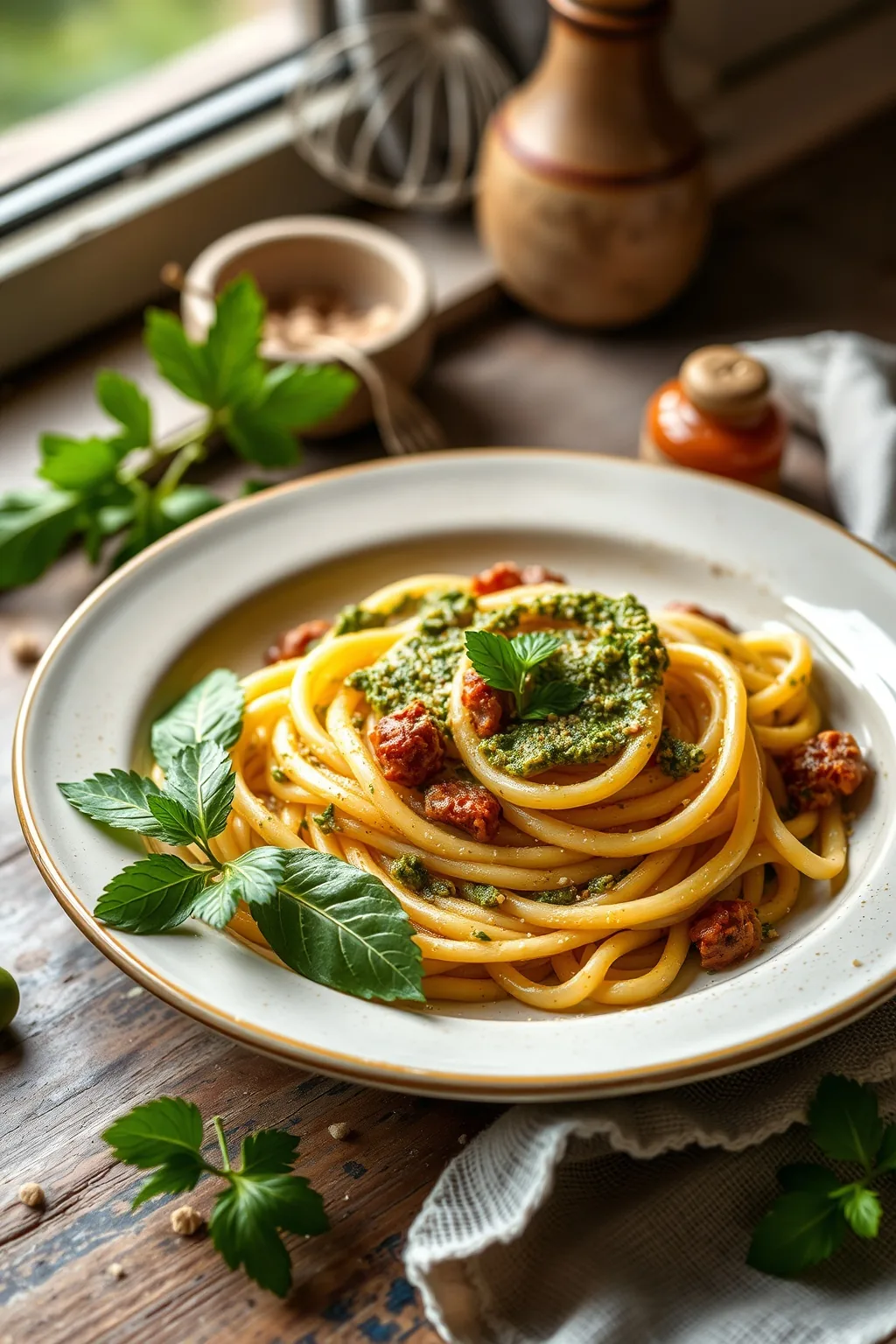
Ingredients
- 400g dried busiate pasta or trofie
- 100g fresh basil leaves
- 50g roasted almonds, blanched
- 3 medium ripe tomatoes (about 400g), halved and seeded
- 3 garlic cloves
- 80ml extra-virgin olive oil
- 30g Pecorino Romano cheese, grated
- 15ml fresh lemon juice
- 5g sea salt
- 2g black pepper
- pinch of red pepper flakes (optional)
Instructions
-
Toast the roasted almonds in a dry skillet over medium heat for 2 minutes, stirring frequently, until fragrant. Transfer to a cutting board and chop roughly.
-
Bring a large pot of salted water to a rolling boil. Add the busiate pasta and cook according to package directions, usually 10-12 minutes, until al dente.
-
While the pasta cooks, place the basil leaves, chopped almonds, garlic cloves, and tomato halves into a food processor.
-
Pulse the ingredients 5-6 times until the mixture reaches a rough, chunky consistency—do not overprocess into a fine paste.
-
Transfer the pesto to a large bowl and stir in the olive oil, lemon juice, sea salt, black pepper, and red pepper flakes if using. Mix gently until combined.
-
Reserve 200ml of pasta cooking water, then drain the busiate into a colander.
-
Add the hot drained pasta directly to the pesto bowl and toss vigorously for 1-2 minutes, adding reserved pasta water a little at a time until the sauce clings to each strand of pasta.
-
Divide the dressed pasta among four warmed bowls and top each portion with 1-2 tablespoons of grated Pecorino Romano cheese.
Substitutions
- Use blanched hazelnuts instead of almonds for a nuttier flavor variation
- Substitute Pecorino Siciliano for Pecorino Romano for an even more regional authenticity
- Replace fresh basil with a mix of fresh mint and basil (50:50) for a more herbaceous finish
- For nut-free preparation, replace almonds with toasted breadcrumbs made from day-old ciabatta
Tips
- Do not cook the pesto before serving; the heat from the hot pasta gently warms it while preserving the fresh basil flavor and vibrant color
- Busiate is traditionally made by hand rolling pasta around a thin wooden rod; trofie is an acceptable substitute if busiate is unavailable
- Reserve generous amounts of starchy pasta water—it helps emulsify the pesto and create a silky sauce that coats every strand
- Taste and adjust seasoning at the end; add more salt or lemon juice according to your preference before serving
Pesto Trapanese originates from Trapani, a port city in western Sicily, and differs from Ligurian pesto by featuring tomatoes and almonds instead of pine nuts and cheese. This recipe has been passed down through Sicilian families for generations and represents the island's Arab-Norman culinary heritage, blending Mediterranean herbs with Middle Eastern nuts.
Frequently Asked Questions
How long does Busiate with Pesto Trapanese Recipe take to make?
Busiate with Pesto Trapanese Recipe takes about 37 minutes total — 25 minutes of prep and 12 minutes of cooking — and makes 4 servings.
What can I substitute in Busiate with Pesto Trapanese Recipe?
You can adapt it easily: Use blanched hazelnuts instead of almonds for a nuttier flavor variation; Substitute Pecorino Siciliano for Pecorino Romano for an even more regional authenticity; Replace fresh basil with a mix of fresh mint and basil (50:50) for a more herbaceous finish.
How should I store leftover Busiate with Pesto Trapanese Recipe?
Store leftovers in an airtight container in the refrigerator for up to 3–4 days and reheat gently before serving.
How much protein is in Busiate with Pesto Trapanese Recipe?
Each serving of Busiate with Pesto Trapanese Recipe has about 22g of protein and 680 calories.


Loading comments...