Fettuccine Carbonara Recipe
Fettuccine Carbonara is a classic Roman pasta dish that combines crispy guanciale, creamy eggs, and sharp Pecorino Romano cheese in a silky sauce that coats each strand of fettuccine. This iconic preparation requires only five core ingredients and demands precise timing and technique to achieve the perfect emulsified texture. Authentic carbonara is rich, savory, and deeply satisfying—a testament to Italian culinary simplicity and mastery.
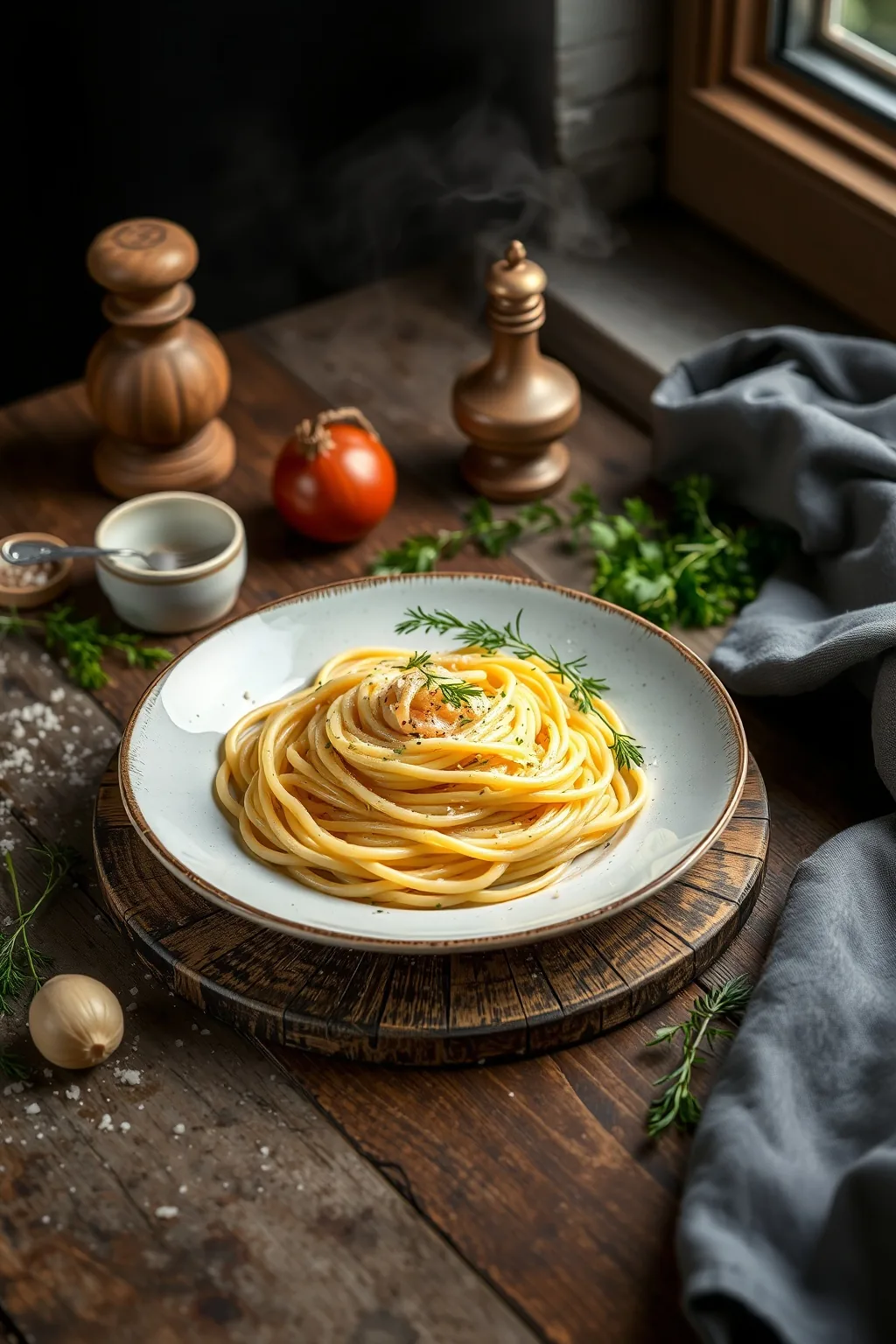
Ingredients
- 400g fettuccine pasta
- 200g guanciale (cured pork jowl), cut into 5mm cubes
- 4 large egg yolks
- 100g Pecorino Romano cheese, finely grated
- 50g Parmigiano-Reggiano cheese, finely grated
- Freshly ground black pepper to taste
- Sea salt for pasta water
Instructions
-
Bring a large pot of salted water to a rolling boil. Add fettuccine and cook according to package directions until al dente, typically 9-11 minutes. Reserve 240ml (1 cup) of pasta cooking water before draining.
-
While pasta cooks, place guanciale cubes in a large cold skillet over medium heat. Cook for 8-10 minutes, stirring occasionally, until the fat renders and the meat becomes crispy and golden brown. Remove from heat.
-
In a medium bowl, whisk together egg yolks with a pinch of black pepper and sea salt until well combined and slightly lightened in color.
-
Combine grated Pecorino Romano and Parmigiano-Reggiano cheeses in a separate bowl.
-
Return the guanciale skillet to low heat. Immediately add the hot drained pasta to the warm (not hot) guanciale and fat, tossing constantly to combine.
-
Remove the skillet from heat. Slowly pour the egg yolk mixture over the pasta while tossing vigorously and continuously for 2-3 minutes, allowing residual heat to gently cook the eggs into a creamy sauce.
-
Add the grated cheese mixture in two additions, tossing constantly between additions to incorporate evenly. If the sauce appears too thick, add reserved pasta water 30ml (2 tablespoons) at a time until you reach a silky, pourable consistency.
-
Taste and adjust seasoning with additional salt and freshly ground black pepper. Divide among warm serving bowls and garnish with extra grated cheese and cracked black pepper. Serve immediately.
Substitutions
- For guanciale unavailability: use pancetta, though the flavor profile will be less rich and slightly less authentic
- For egg yolk safety concerns: use pasteurized eggs or heat the mixture to 65°C (149°F) while whisking constantly
- For Pecorino Romano: substitute with aged Asiago or Grana Padano, though Pecorino's sharp funk is irreplaceable
- For vegetarian preparation: replace guanciale with crispy mushroom pieces or smoked paprika-seasoned tofu, though this fundamentally changes the dish
Tips
- Never use cream, butter, or oil to create the sauce; the emulsion comes solely from egg yolks, cheese, and pasta starch combined with residual heat
- Keep all components warm but ensure the temperature never exceeds 70°C (158°F) to prevent scrambling the eggs—low and slow is essential
- Have all ingredients prepped and measured before cooking pasta; carbonara demands quick, confident execution once the pasta drains
- Toss pasta and egg mixture off heat for at least 2-3 minutes to allow gentle, even cooking of the eggs into a silky sauce
Carbonara originated in Rome's Lazio region after World War II, combining humble Roman ingredients with American inspiration from bacon-loving GIs. The dish's name likely derives from either charcoal workers (carbonari) who ate similar pasta, or from the black pepper flecks resembling coal dust—a fitting origin story for Rome's most iconic pasta.
Frequently Asked Questions
How long does Fettuccine Carbonara Recipe take to make?
Fettuccine Carbonara Recipe takes about 25 minutes total — 10 minutes of prep and 15 minutes of cooking — and makes 4 servings.
What can I substitute in Fettuccine Carbonara Recipe?
You can adapt it easily: For guanciale unavailability: use pancetta, though the flavor profile will be less rich and slightly less authentic; For egg yolk safety concerns: use pasteurized eggs or heat the mixture to 65°C (149°F) while whisking constantly; For Pecorino Romano: substitute with aged Asiago or Grana Padano, though Pecorino's sharp funk is irreplaceable.
How should I store leftover Fettuccine Carbonara Recipe?
Store leftovers in an airtight container in the refrigerator for up to 3–4 days and reheat gently before serving.
How much protein is in Fettuccine Carbonara Recipe?
Each serving of Fettuccine Carbonara Recipe has about 32g of protein and 720 calories.
Loading comments...