Bucatini All Amatriciana Recipe
Bucatini all'Amatriciana is a classic Roman pasta dish featuring thick, slightly chewy bucatini noodles coated in a rich tomato sauce studded with guanciale, a cured pork jowl. This authentic preparation from the Lazio region combines crispy rendered pork fat with sweet tomatoes and pecorino romano cheese for a deeply savory, unforgettable sauce. The dish represents the essence of traditional Roman cucina povera, elevating humble ingredients into something exceptional.
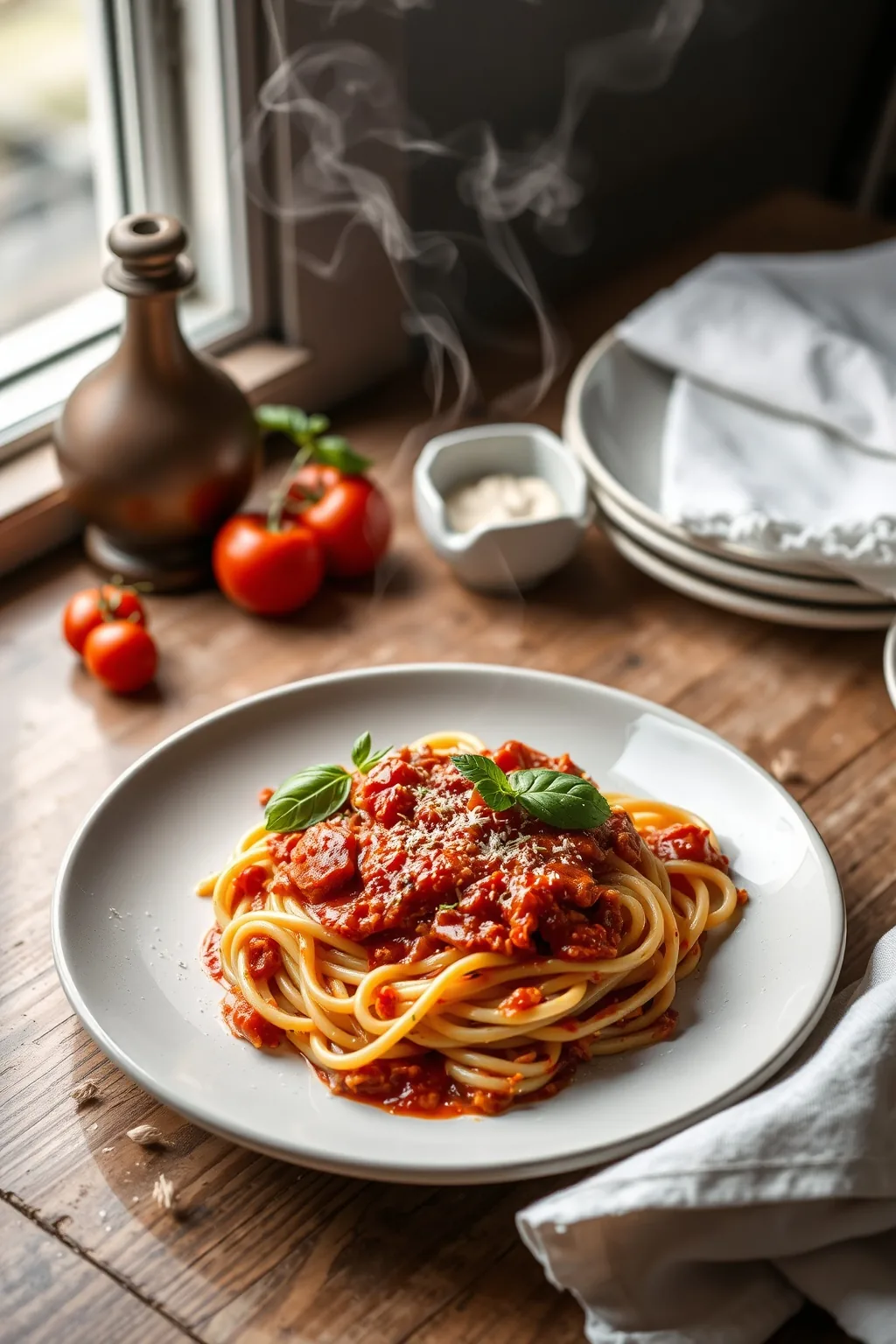
Ingredients
- 200g bucatini pasta
- 200g guanciale, cut into 5mm thick matchsticks
- 400g canned San Marzano tomatoes (or 400g fresh plum tomatoes, crushed)
- 100g pecorino romano cheese, finely grated
- 1 small onion (about 100g), finely sliced
- 2 cloves garlic, minced
- 30ml extra virgin olive oil
- 1 teaspoon red pepper flakes (adjust to taste)
- Salt and black pepper to taste
- Fresh parsley leaves (optional, 10g for garnish)
Instructions
-
Bring a large pot of salted water to a rolling boil. Add bucatini and cook according to package directions until al dente (typically 9-12 minutes). Reserve 240ml of pasta water before draining.
-
While water heats, place guanciale matchsticks in a cold large skillet or sauté pan. Turn heat to medium and render the pork fat slowly, stirring occasionally until the guanciale is golden and crispy at the edges, about 8-10 minutes.
-
Remove guanciale with a slotted spoon to a paper towel-lined plate, leaving the rendered fat in the pan. Add sliced onion to the fat and sauté gently over medium-low heat for 3-4 minutes until softened and very lightly golden, stirring occasionally.
-
Add minced garlic and red pepper flakes to the pan and cook for 30 seconds until fragrant, stirring constantly to prevent burning.
-
Pour the crushed tomatoes into the pan with their juices. Stir well to combine. Bring to a gentle simmer and cook uncovered for 8-10 minutes, stirring occasionally. The sauce should thicken slightly and deepen in color.
-
Return the crispy guanciale to the pan and stir through. Taste the sauce and adjust seasoning with salt and black pepper as needed. Add a splash of reserved pasta water if the sauce seems too thick.
-
Add the cooked, drained bucatini directly to the sauce pan. Toss gently but thoroughly, adding pasta water 60ml at a time until the pasta is well coated and moves easily within the sauce. The dish should have a glossy, light sauce, not dry.
-
Remove from heat. Add three-quarters of the grated pecorino romano and fold through gently until incorporated. Divide between four warm bowls or plates.
-
Garnish each portion with remaining pecorino romano and a small handful of fresh parsley if desired. Serve immediately while steaming hot.
Substitutions
- Guanciale can be replaced with pancetta (use the same weight), though the authentic fat content and flavor will differ slightly
- Pecorino romano can be substituted with aged Parmigiano-Reggiano if needed, though pecorino's sharper, saltier profile is traditional
- Bucatini can be replaced with spaghetti, spaghettoni, or tonnarelli pasta
- For a lighter version, use extra virgin olive oil to replace half the rendered guanciale fat (though this deviates from tradition)
Tips
- Do not use pre-grated cheese from a box, as it contains anti-caking agents and will not melt smoothly into the pasta; always grate fresh
- Rendering guanciale slowly over medium-low heat is essential—high heat will make it tough and bitter rather than crispy and savory
- Reserve pasta water before draining; its starch is crucial for creating a silky sauce that coats the pasta evenly
- Never cook the sauce more than 10 minutes after adding tomatoes, or it can become too acidic; this dish relies on fresh, bright tomato flavor
Bucatini all'Amatriciana originates from Amatrice, a small town in the Lazio region east of Rome, and is one of the four canonical Roman pasta sauces alongside Cacio e Pepe, Carbonara, and Gricia. Traditionally, this dish was made by shepherds and rural workers who used preserved guanciale, tomatoes, and hard cheese—ingredients that stored well without refrigeration.
Frequently Asked Questions
How long does Bucatini All Amatriciana Recipe take to make?
Bucatini All Amatriciana Recipe takes about 40 minutes total — 15 minutes of prep and 25 minutes of cooking — and makes 4 servings.
What can I substitute in Bucatini All Amatriciana Recipe?
You can adapt it easily: Guanciale can be replaced with pancetta (use the same weight), though the authentic fat content and flavor will differ slightly; Pecorino romano can be substituted with aged Parmigiano-Reggiano if needed, though pecorino's sharper, saltier profile is traditional; Bucatini can be replaced with spaghetti, spaghettoni, or tonnarelli pasta.
How should I store leftover Bucatini All Amatriciana Recipe?
Store leftovers in an airtight container in the refrigerator for up to 3–4 days and reheat gently before serving.
How much protein is in Bucatini All Amatriciana Recipe?
Each serving of Bucatini All Amatriciana Recipe has about 28g of protein and 620 calories.

Loading comments...