Fettuccine Alfredo Recipe
Fettuccine Alfredo is a classic Roman pasta dish known for its silky, luxurious sauce made from butter, Parmigiano-Reggiano, and cream. This simple yet elegant preparation celebrates quality ingredients, delivering rich, velvety noodles that coat every strand. Despite its simplicity, timing and technique are essential to achieve the perfect creamy consistency without breaking the sauce.
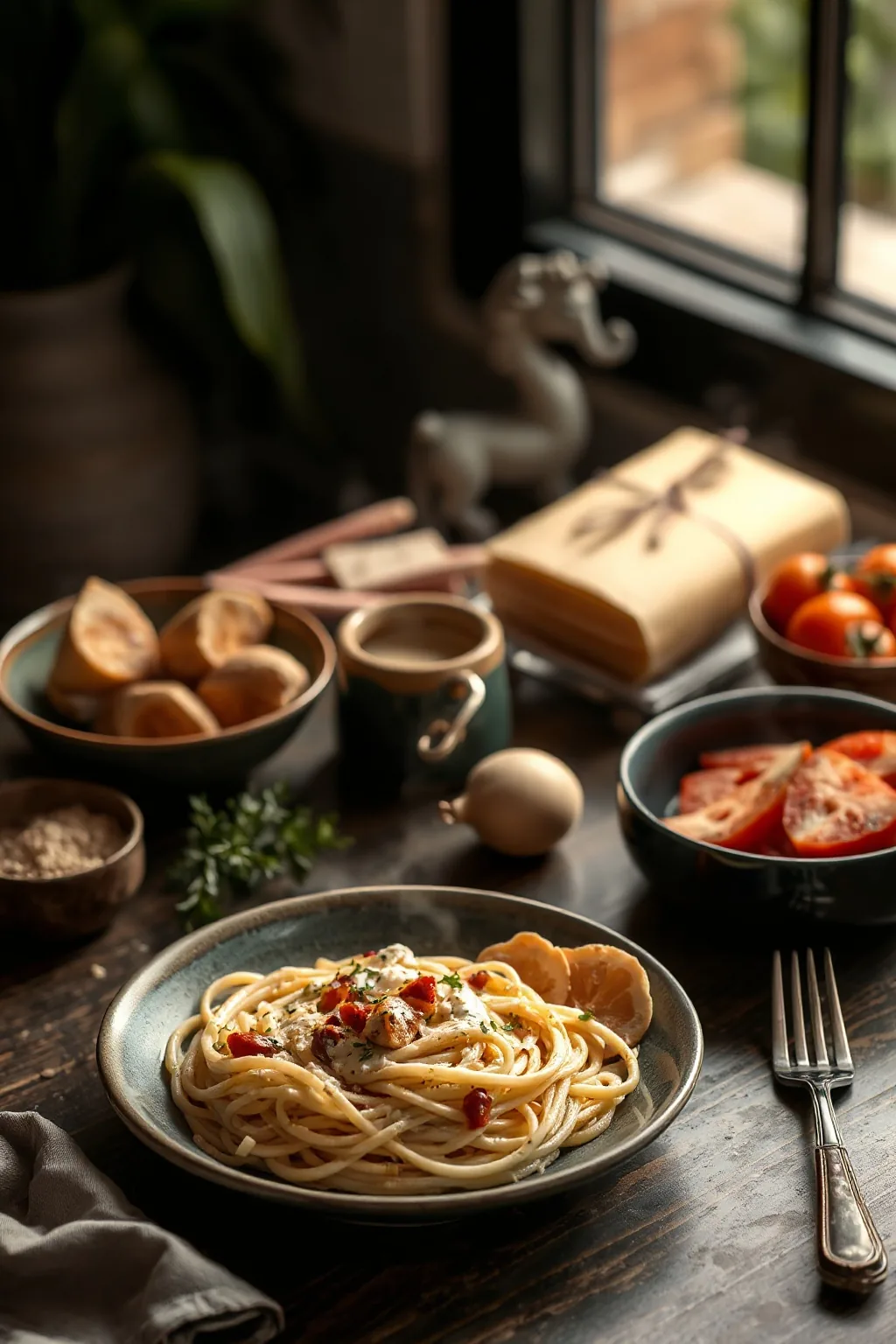
Ingredients
- 400 g fettuccine pasta (14 oz)
- 115 g unsalted butter (4 oz or 1 stick)
- 240 ml heavy cream (1 cup)
- 120 g Parmigiano-Reggiano cheese, finely grated (4.2 oz)
- 3 large egg yolks
- 2 cloves garlic, minced
- Salt and freshly ground black pepper to taste
- Pinch of nutmeg (optional)
- 2 tablespoons fresh parsley, chopped (for garnish)
Instructions
-
Bring a large pot of salted water to a rolling boil. Add fettuccine and cook until al dente, approximately 9-11 minutes, stirring occasionally to prevent sticking. Reserve 120 ml (1/2 cup) of pasta water before draining.
-
While pasta cooks, combine egg yolks and 60 ml (1/4 cup) of the reserved pasta water in a small bowl. Whisk together until well blended, then set aside.
-
In a large skillet over medium heat, melt the butter. Add minced garlic and sauté for 30-40 seconds until fragrant, stirring constantly to avoid browning.
-
Reduce heat to medium-low. Add heavy cream to the butter and garlic mixture, stirring gently to combine. Warm the cream for 1-2 minutes without boiling.
-
Slowly pour the egg yolk mixture into the warm cream while whisking constantly to prevent the eggs from scrambling. Continue whisking until the sauce thickens slightly, approximately 1-2 minutes.
-
Remove from heat and immediately add the grated Parmigiano-Reggiano cheese, stirring continuously until fully incorporated and the sauce is creamy and smooth.
-
Add the drained fettuccine to the sauce, tossing gently and continuously for 1-2 minutes. Add pasta water gradually as needed to achieve the desired consistency; the sauce should coat the noodles luxuriously without pooling at the bottom.
-
Season to taste with salt, freshly ground black pepper, and a pinch of nutmeg if desired. Divide into serving bowls immediately and garnish with fresh parsley. Serve at once while hot.
Substitutions
- Substitute heavy cream with crème fraîche or Greek yogurt for a lighter version with tangy undertones
- Replace Parmigiano-Reggiano with Pecorino Romano for a more peppery, robust flavor
- Use egg yolks or a mixture of egg yolks and cornstarch to stabilize the sauce if concerned about raw eggs; whisk cornstarch with pasta water before combining
- Substitute butter with extra virgin olive oil for a leaner, more Mediterranean-style version
Tips
- Temperature control is critical—keep the heat low and work quickly to prevent the eggs from scrambling. The residual heat from the hot pasta and skillet will cook the eggs gently.
- Reserve pasta water before draining; the starch in this water helps emulsify and thicken the sauce naturally without flour.
- Use freshly grated Parmigiano-Reggiano rather than pre-grated cheese, which contains anti-caking agents and won't melt as smoothly into the sauce.
- Serve immediately in warmed bowls to maintain optimal temperature and sauce consistency throughout the meal.
Fettuccine Alfredo originates from Rome, Italy, where it was created in the 1950s at a restaurant in the historic Trevi district. Despite popular misconception, this dish is not a traditional recipe from antiquity; it represents post-war Italian innovation celebrating the richness of butter and cheese. The dish became internationally famous after American actors promoted it during their Italian travels, though Romans enjoy it as a simple, elegant preparation meant to highlight ingredient quality.
Frequently Asked Questions
How long does Fettuccine Alfredo Recipe take to make?
Fettuccine Alfredo Recipe takes about 25 minutes total — 10 minutes of prep and 15 minutes of cooking — and makes 4 servings.
What can I substitute in Fettuccine Alfredo Recipe?
You can adapt it easily: Substitute heavy cream with crème fraîche or Greek yogurt for a lighter version with tangy undertones; Replace Parmigiano-Reggiano with Pecorino Romano for a more peppery, robust flavor; Use egg yolks or a mixture of egg yolks and cornstarch to stabilize the sauce if concerned about raw eggs; whisk cornstarch with pasta water before combining.
How should I store leftover Fettuccine Alfredo Recipe?
Store leftovers in an airtight container in the refrigerator for up to 3–4 days and reheat gently before serving.
How much protein is in Fettuccine Alfredo Recipe?
Each serving of Fettuccine Alfredo Recipe has about 32g of protein and 720 calories.
Loading comments...